
Listen on Spotify
Listen on Apple Podcasts
A secret hidden in plain sight
For years, whispers about a secret Pentagon project studying UFOs circulated through military circles and conspiracy forums alike. Few believed it was real—until one scientist decided to break his silence.
That scientist is Dr. Jim Lacatski, a physicist who quietly led the Advanced Aerospace Weapon System Applications Program, or AAWSAP, the largest government-funded UFO investigation in U.S. history. Conducted under deep secrecy from an unassuming location in Las Vegas, AAWSAP’s mission wasn’t just to observe unidentified craft—it was to understand and, if possible, reverse engineer the technology behind them.
Now, Lacatski has begun revealing what the program discovered. And if what he claims is true, it could change everything we think we know about UFOs—and humanity’s place in the universe.
The origins of a classified program
AAWSAP began in 2008 as a Pentagon initiative focused on “advanced aerospace threats.” Officially, it was part of the Defense Intelligence Agency’s mission to study potential foreign technology breakthroughs. Unofficially, it became the government’s most extensive effort to analyze and replicate non-human craft.
The funding—about $22 million—was quietly secured by Senator Harry Reid, a longtime believer in UFO research. Reid funneled the money to a private contractor in Nevada called Bigelow Aerospace Advanced Space Studies (BAASS), led by billionaire entrepreneur Robert Bigelow, who had a well-documented interest in the paranormal.
From there, the real work began.
A race to reverse engineer the unknown
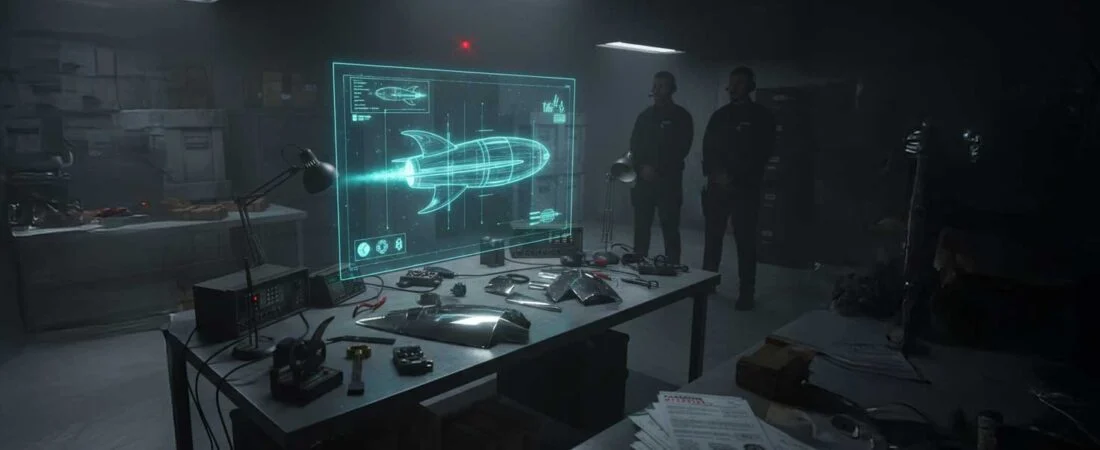
Dr. Lacatski and his team were tasked with studying reports of unidentified aerial phenomena, analyzing materials allegedly recovered from crash sites, and investigating what they described as “transmedium vehicles”—craft that can move effortlessly through air, water, and even space.
Their goal was nothing short of extraordinary: to determine whether these objects represented advanced foreign weapons or something not of this Earth.
In his recent book, Inside the U.S. Government Covert UFO Program, Lacatski states bluntly that the team encountered evidence suggesting at least one recovered craft of unknown origin. He describes propulsion systems and energy signatures that defy conventional science. “It is not human technology,” he writes. “The physics are beyond our current understanding.”
The Las Vegas connection
What makes this story even stranger is where it unfolded. AAWSAP operated out of Las Vegas, Nevada—a city already steeped in myths of Area 51, desert test ranges, and UFO lore. But unlike Area 51, this wasn’t a military base hidden behind barbed wire. The research was conducted through private channels, making it harder to track and easier to deny.
Las Vegas became a quiet hub for government contractors, scientists, and intelligence personnel working on phenomena that blended science with the supernatural. The program didn’t just study craft in the sky; it also investigated paranormal side effects allegedly linked to UFO encounters—something that set it apart from any other defense project.
UFOs and the paranormal
One of the more controversial claims from Lacatski’s disclosures is that the phenomena observed by AAWSAP were not limited to physical craft. The team reportedly documented paranormal activity at certain investigation sites—events that suggested a link between UFOs and consciousness, or even other dimensions of reality.
These accounts echo stories from the Skinwalker Ranch investigation, which was also funded through Bigelow’s organization and tied to the same network of scientists. Witnesses described poltergeist activity, cryptid sightings, and strange electromagnetic effects that coincided with UFO observations.
For Lacatski, this reinforced a radical idea: that UFOs and paranormal experiences might be connected parts of a single, larger phenomenon—one that humanity has only begun to perceive.
A program cut short
Despite its groundbreaking ambitions, AAWSAP didn’t last long. Senator Reid abruptly ended the program’s funding after just two years, fearing that word of its existence might leak during his re-election campaign. In interviews since, Reid expressed regret that political pressure forced his hand, saying, “We were on to something historic.”
After AAWSAP’s closure, parts of its mission were quietly absorbed into other classified Pentagon projects, including the better-known Advanced Aerospace Threat Identification Program (AATIP). But Lacatski maintains that AAWSAP’s research was far broader and more ambitious than AATIP ever became.
The evidence and the silence
So what exactly did AAWSAP uncover? According to Lacatski, the program analyzed dozens of UFO encounters reported by military pilots, radar operators, and civilians. Many of these reports involved objects exhibiting acceleration, maneuverability, and flight behavior impossible under known physics.
Lacatski has stated publicly that at least one craft of non-human origin is in the possession of the U.S. government, though details remain classified. “We are not alone,” he insists, echoing what insiders have hinted for years.
Yet, despite his revelations, the U.S. government remains silent. No official acknowledgment has been made, no photographs released, and no materials displayed. The secrecy persists, even as Congress and the public push harder for full UFO and UAP disclosure.
A call for transparency
The ongoing debate around AAWSAP reflects a broader cultural shift. Scientists, lawmakers, and everyday citizens are demanding that governments worldwide reveal what they know about UFOs. Organizations like The Disclosure Project and researchers like Luis Elizondo and David Grusch have intensified this movement, arguing that the truth can no longer be contained behind classification walls.
Dr. Lacatski’s willingness to speak may be one of the first cracks in that wall. His testimony adds weight to the idea that the U.S. government’s interest in UFOs goes far beyond curiosity—it may be about harnessing alien propulsion technology that could redefine how humanity travels and communicates.
The next chapter
For now, the public only knows fragments of what happened inside AAWSAP’s secret Las Vegas operation. The data remains classified, the physical evidence hidden, and the official stance ambiguous.
But history has a way of surfacing the truth. The same skepticism that surrounded early UFO research is now fading as the Pentagon, NASA, and world governments acknowledge unidentified phenomena as real.
Whether the objects are foreign, interdimensional, or extraterrestrial, one fact remains: the government once poured millions into studying them. And that study happened not in some remote desert bunker—but in the middle of Las Vegas.
AAWSAP may have ended, but its echoes continue to ripple through science, politics, and belief itself.