
Listen on Spotify
Listen on Apple Podcasts
The oldest nightmare
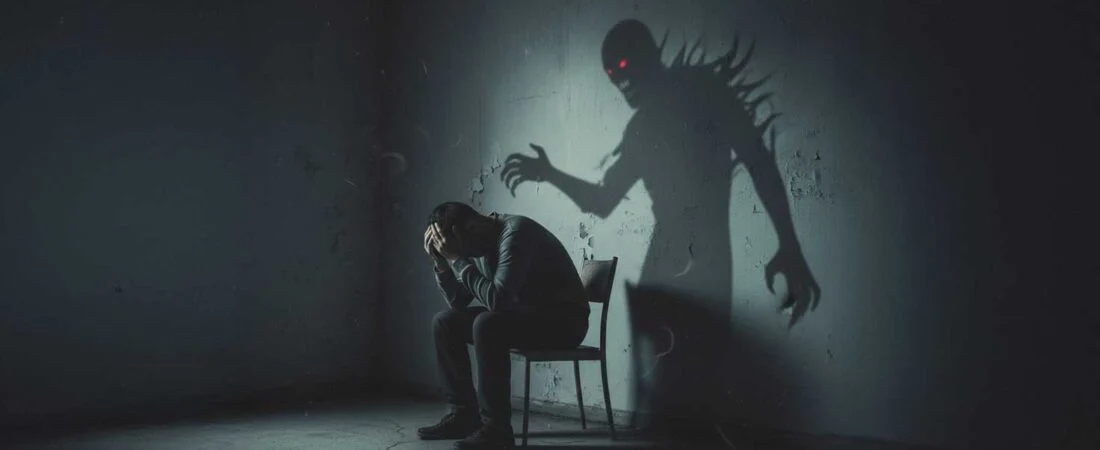
Few ideas in human history have stirred such lasting dread as possession. The belief that an unseen force can enter the human body and seize control of mind and soul transcends religion, culture, and time. From ancient Sumerian tablets to modern viral videos, stories of people overtaken by something other than themselves have followed humanity like a shadow.
It is the fear of losing what makes us human. Our will. Our identity. Our very self.
The horror of being taken
Ask anyone who has brushed up against possession, whether through family stories, folklore, or faith, and you will hear the same theme repeated. Terror. The sense that a hostile intelligence can overtake the body and twist it into something unrecognizable.
Those described as possessed often speak in voices not their own. Their bodies contort in ways that seem impossible. Eyes roll back, words pour out in forgotten languages, and objects move with unseen force. Even skeptics admit that these experiences defy easy explanation.
Pop culture burned this fear into modern memory through The Exorcist. Linda Blair’s portrayal of a child consumed by an evil presence terrified audiences around the world. The shock was not just the violence on screen, but the idea behind it. What if the loss of control was not symbolic but real?
But long before Hollywood discovered it, possession had already haunted every civilization on Earth.
Possession through the ages
In ancient Sumeria, over 4,000 years ago, clay tablets described priests performing rituals to free victims “seized” by invisible forces. Early healers blended medicine and magic, believing that disease and madness were signs of spirits gone astray.
In the Hebrew scriptures, King Saul is said to have been tormented by an “evil spirit from the Lord.” The New Testament carries the theme further, with Jesus driving out unclean spirits that identify themselves as “Legion.” Such stories shaped centuries of faith, fear, and exorcism.
During the Middle Ages, the lines between mental illness and spiritual attack blurred completely. Priests performed brutal rites meant to drive out demons, sometimes lasting days or weeks. The Roman Ritual of 1614 formalized these practices into precise instructions for Catholic exorcists.
As witch trials swept through Europe and colonial America, the idea of possession turned deadly. In Salem, girls claimed they were attacked by unseen forces. Their accusations sparked mass hysteria and executions. Historians now point to psychological contagion, social tension, and ergot poisoning as possible causes, but in 1692, there was only one explanation. The devil was loose in New England.
Famous modern cases
The twentieth century brought possession stories into the age of documentation. In Germany, Anneliese Michel underwent 67 exorcisms between 1975 and 1976, a case that inspired The Exorcism of Emily Rose. Her death raised questions about faith, medicine, and the limits of belief.
In South Africa, Clara Germana Cele, a schoolgirl in 1906, reportedly spoke multiple languages and displayed superhuman strength during trances. The Smurl Haunting of 1980s Pennsylvania merged poltergeist activity with claims of demonic attack, becoming one of the most publicized cases of its time.
Each story shares the same arc. An unexplained change, a desperate search for help, and a struggle between the visible and the unseen.
Possession across cultures
Possession is not confined to Christianity or the West. Across continents, it takes on many names and meanings.
The Dybbuk in Jewish folklore is believed to be the spirit of the restless dead, attaching itself to the living until justice or ritual release is achieved.
In parts of Africa, Asia, and the Americas, shamans and priests willingly invite spirits into their bodies during ceremonies. These possessions are seen as sacred, a way to channel divine wisdom or healing power.
The Zar tradition of North Africa and the Middle East uses drumming and dance to communicate with spirits responsible for illness or misfortune, blending rhythm and faith into ritual harmony.
Whether feared or revered, the pattern remains the same. The self becomes a vessel. Something else takes hold.
The science of possession
Modern medicine and psychology view possession through a different lens. Many symptoms once seen as spiritual are now recognized as signs of epilepsy, schizophrenia, dissociative identity disorder, or mass psychogenic illness.
Victims may hear voices, lose memory, or display alternate personalities. Stress, trauma, or social pressure can trigger these events, especially in cultures where spiritual possession is part of belief systems.
Yet even science cannot explain everything. Psychiatrist Dr. Richard Gallagher, a Yale-trained medical expert, has publicly testified to witnessing cases that defied diagnosis. He describes patients speaking unknown languages and demonstrating knowledge they could not have learned. His conclusion is cautious but striking. Some cases, he says, appear genuinely supernatural.
The power of belief itself is undeniable. In societies where exorcism is accepted, it can act as both cure and cause. The mind and spirit intertwine, turning faith into a battlefield between the rational and the mysterious.
Possession in the digital age
You might expect such ancient fears to fade in the light of science and technology. Instead, they have adapted. Social media now amplifies possession stories faster than ever before. Viral challenges, haunted objects, and “demonic” apps circulate across platforms.
New generations experience possession not in candlelit chapels but through screens and algorithms. Online communities discuss spirit attachments, AI consciousness, and mind-control experiments. Some link possession to secret government programs or psychological manipulation.
The imagery is the same, only the medium has changed. Whether through demons, data, or dreams, the fear of losing control remains as potent as ever.
Why the story endures
Why does the tale of possession refuse to die? Because it is not just about religion or horror. It is about identity.
Possession terrifies us because it asks the most intimate question imaginable. What happens when “I” is no longer “me”? When our thoughts and actions are no longer our own? It is a fear that transcends faith, culture, and technology.
The story endures because it mirrors the human struggle for autonomy in every age. From spirits to science fiction, it is always the same nightmare. To lose oneself completely.
So tonight, as you listen to The Oddity Files, remember that these stories are more than superstition. They are reflections of the oldest human fear. And perhaps the most personal one.
Keep the lights on.