
Listen on Spotify
Listen on Apple Podcasts
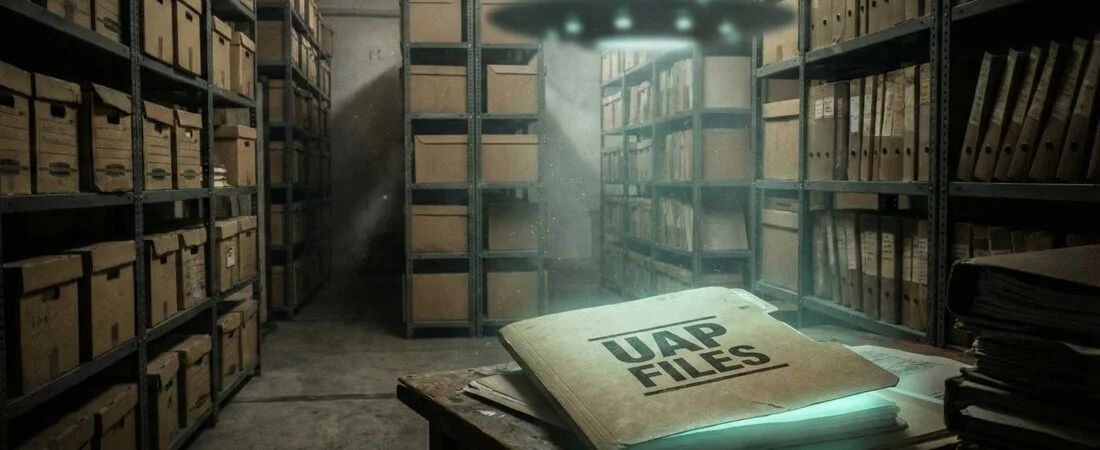
For years, whispers have drifted through the world of UFO research: somewhere inside the archives of the United States government sit documents, images, radar logs, and testimony that have never seen the light of day. Files that might confirm what pilots, soldiers, and ordinary witnesses have described for decades. Files that could finally answer the question that refuses to fade: what has the government really discovered about unidentified aerial phenomena?
Now those whispers have become something louder.
Recent reports claim that former President Donald Trump is preparing to support the declassification of a massive collection of UAP related documents. According to multiple sources, he intends to push for disclosing long held records involving sightings, crash retrievals, and government investigations into non human intelligence. The phrase “Americans have a right to know” echoed across news segments and online platforms. Whether political, strategic, or something deeper, the sudden momentum behind disclosure has set off a wave of curiosity and confusion.
For decades, administrations from both parties deflected questions about UFOs. Explanations were vague, dismissive, and usually focused on balloons, aircraft, or experimental military technology. But everything began to shift after 2017, when a set of Navy videos showing strange objects leaked to the public. That triggered congressional hearings, the creation of official UAP offices, and testimony from military personnel who described craft performing maneuvers no known aircraft can achieve.
Then came the whistleblowers.
Former intelligence officer David Grusch made explosive claims: that the government is in possession of retrieved non human craft and has run secret programs for decades to study them. His statements sparked investigations, lawsuits, and congressional battles over transparency. Other military members stepped forward with their own accounts, describing encounters recorded on radar and witnessed by entire crews.
Still, large portions of the story remain behind closed doors.
This is why the idea of a large scale declassification feels so seismic. The reports suggest the files may include:
• radar logs from Navy encounters
• reports describing unknown craft near nuclear sites
• analysis of recovered debris
• pilot testimonies
• internal memos discussing secrecy protocols
• communication between agencies about UAP incidents
Some insiders speculate there may be even more: photographs, audio recordings, or classified satellite intelligence documenting performance characteristics of objects that appear to defy known physics.
Why release all this now?
Supporters of disclosure argue that withholding information about potential non human intelligence creates distrust between the public and the government. They insist people deserve to understand what their own military has been studying. They also claim the stigma around reporting UAP sightings has prevented pilots and officers from speaking openly, creating safety risks.
Others believe the move is political. A high profile push for transparency could generate attention and position a leader as someone unafraid to challenge long standing secrecy. But no matter the motivation, the possibility of seeing these documents has captured global attention.
Behind the scenes, however, not everyone agrees.
Some national security officials warn that full disclosure could reveal sensitive capabilities: radar systems, detection methods, and intelligence strategies. Even if the craft themselves are not human made, the technology the United States uses to track them is still classified. Releasing the files could inadvertently expose military secrets to foreign adversaries.
Others worry about public reaction. A sudden flood of previously hidden information touching on unexplained craft, nuclear site encounters, and recovered materials might cause confusion, panic, or widespread speculation.
But one thing is certain: the landscape surrounding UAPs is changing. Congress has already pushed through multiple laws requiring government agencies to release more UAP related information. Several former officials have spoken publicly about the need for open discussion. Documentaries, including one recently screened on Capitol Hill, feature interviews with retired military personnel describing encounters they were once forbidden to discuss.
And now the momentum behind disclosure is stronger than ever.
If these files are released, they could reshape public understanding of the phenomenon. Even if the documents do not confirm the existence of non human craft, they will likely reveal how deeply the government has investigated the issue and how seriously some departments have treated sightings over the years.
It could also validate thousands of witnesses who have been ignored or ridiculed, showing that their experiences were taken far more seriously inside official channels than publicly acknowledged.
The real question is simple: will this actually happen?
Even with reported support, declassification is a complex, multi agency process. Documents must be reviewed, redacted, cross checked for security risks, and approved by multiple departments. And some files may never be released if agencies argue that their contents pose too great a national security threat.
Still, the possibility is unprecedented. A former president openly pushing the idea, combined with growing pressure from Congress, has created a moment unlike anything seen in the modern UFO era.
Whether the files reveal advanced foreign drones, misunderstood natural phenomena, or something truly extraordinary, the world may soon come closer than ever to understanding the truth behind the lights in our skies.
For now, all we can do is wait — and watch — as the debate over disclosure reaches its most intense point yet.